

PCB Etching



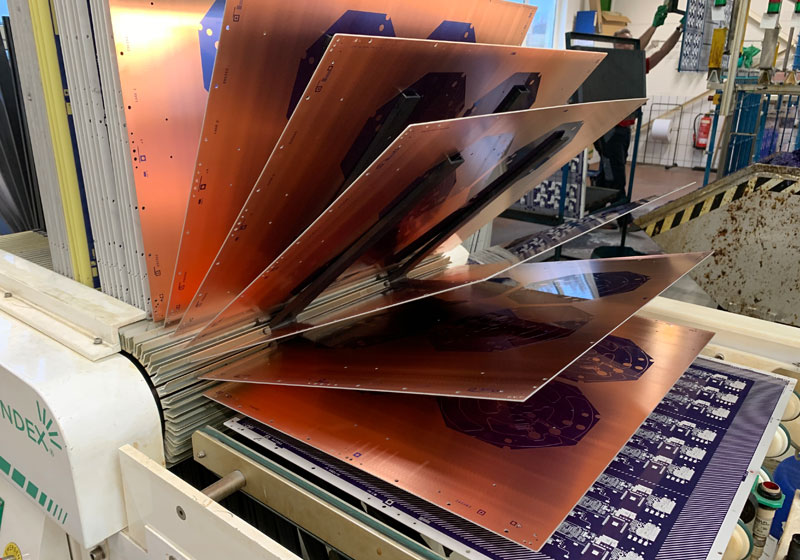
Circuit board etching can be done fairly easily. The actual challenge is not the etching itsself, but the exposure process of the etch resist one step prior to etching.
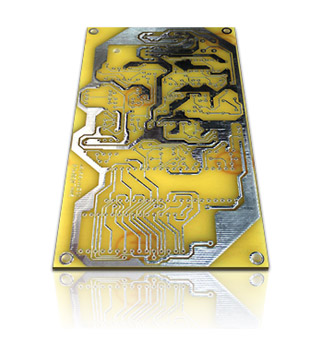
If the resist is not exposed sufficiently, it will rise and will allow the etching fluid to flow under the resits during the PCB etching process. This will cause disruptions in the circuit board.
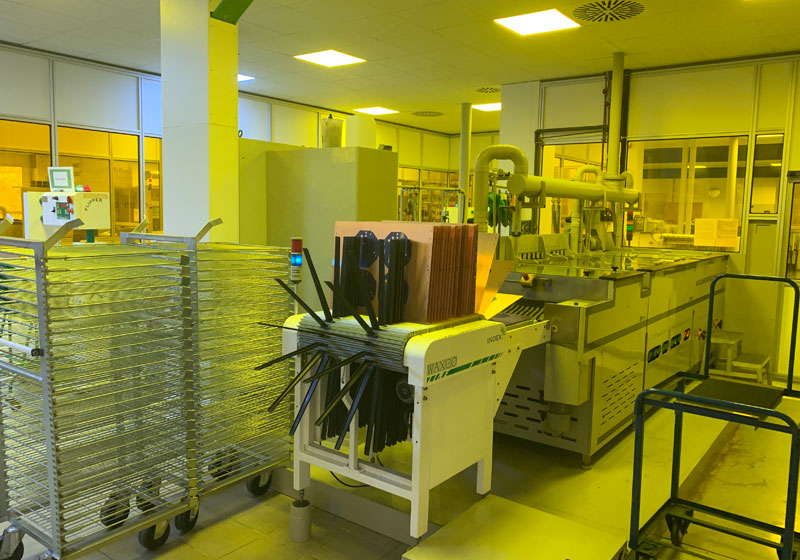
While private circuit board etching will most likly use iron (III)-chloride (FeCl3), professional circuit board production will make use of an ammonium chloride containing a copper chloride solution. The solvin of copper increases the copper concentration and therefore the solution´s density. To keep the copper ions at pH-values in solution of around 8,5, they are linked with ammonia in the copper tetramin complex.
Another important point in circuit board etching is awareness in handling the substances with care.
Iron(III)-chloride has the following characteristics:
- Iron(III)-chloride is an acid! (Identified by hazard material symbol "C")
- Hazardous to health when ingested! (Identified by hazard material symbol "R22")
- Causes skin irritation! (Identified by hazard material symbol "R28")
- May seriously harm eyes! (Identified by hazard material symbol "R41")
- Upon contact, rinse eyes immediately! (Identified by safety notice "S26")
- Consult your doctor immediately!
Profession treatment as in industrial production is usually not possible. Therefore, next to the health risk an additional responsibility for proper disposal arises:
- The solution accruing from the circuit board etching contains Cu2+-ions. These are extremely toxic for marine life and may not be disposed through the sewer!
- The Cu2+-ion limit for sewage (in Germany) is 2mg/l. Sewage above this limit must be disposed of as hazarad waste!
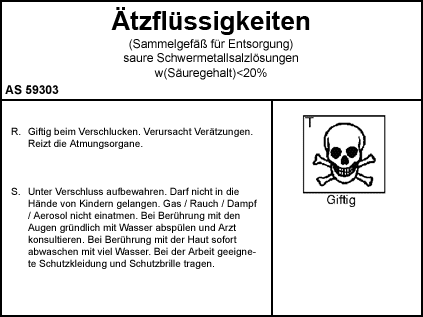
- The etching bath should be filled in containers of max. 2,5l. The labeling should be as demonstrated in this example:
In case you need professional plots or other assistance for your home PCB etching contact us quick and easy by using one ove above mentioned channels. We are looking forward to helping you. Or try our fair-priced online calculation for the most convenient way to your etched PCBs!
Produktion Deutschland